
Our services
Basement Wall Repair & Foundation Crack Repair in Warren, OH
We repair cracked and bowing basement walls in Warren, Ohio, sealing the cracks that leak and stabilizing the walls that have started to move. About 63% of Warren's occupied homes were built before 1960, and decades of wet, clay-rich soil pressing on those foundations is a common reason walls crack and lean. Call 123-456-7890 for a free estimate.
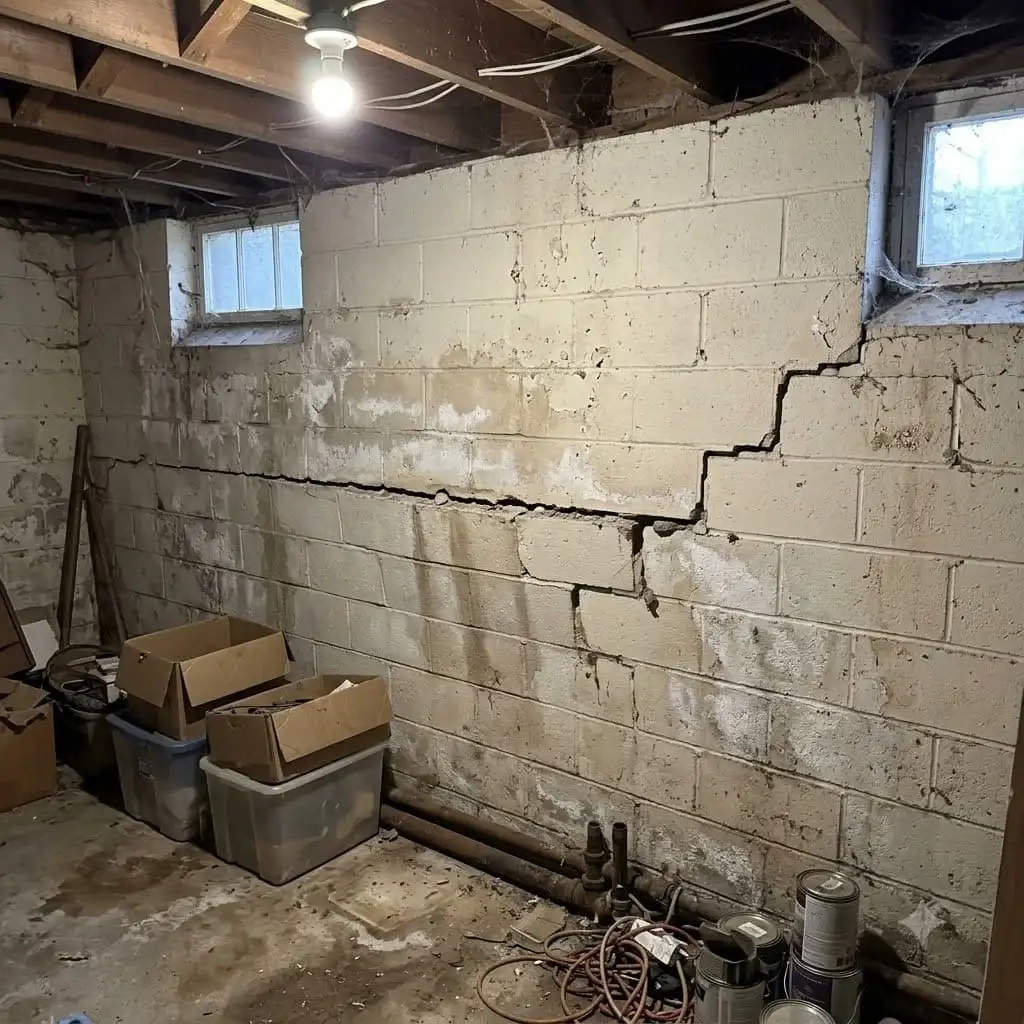
A crack in a basement wall can mean different things. Some are cosmetic shrinkage lines that never move. Others are the first sign that soil and water pressure are pushing the wall, and a wall that is moving needs more than a patch. We start by finding out which kind you have.
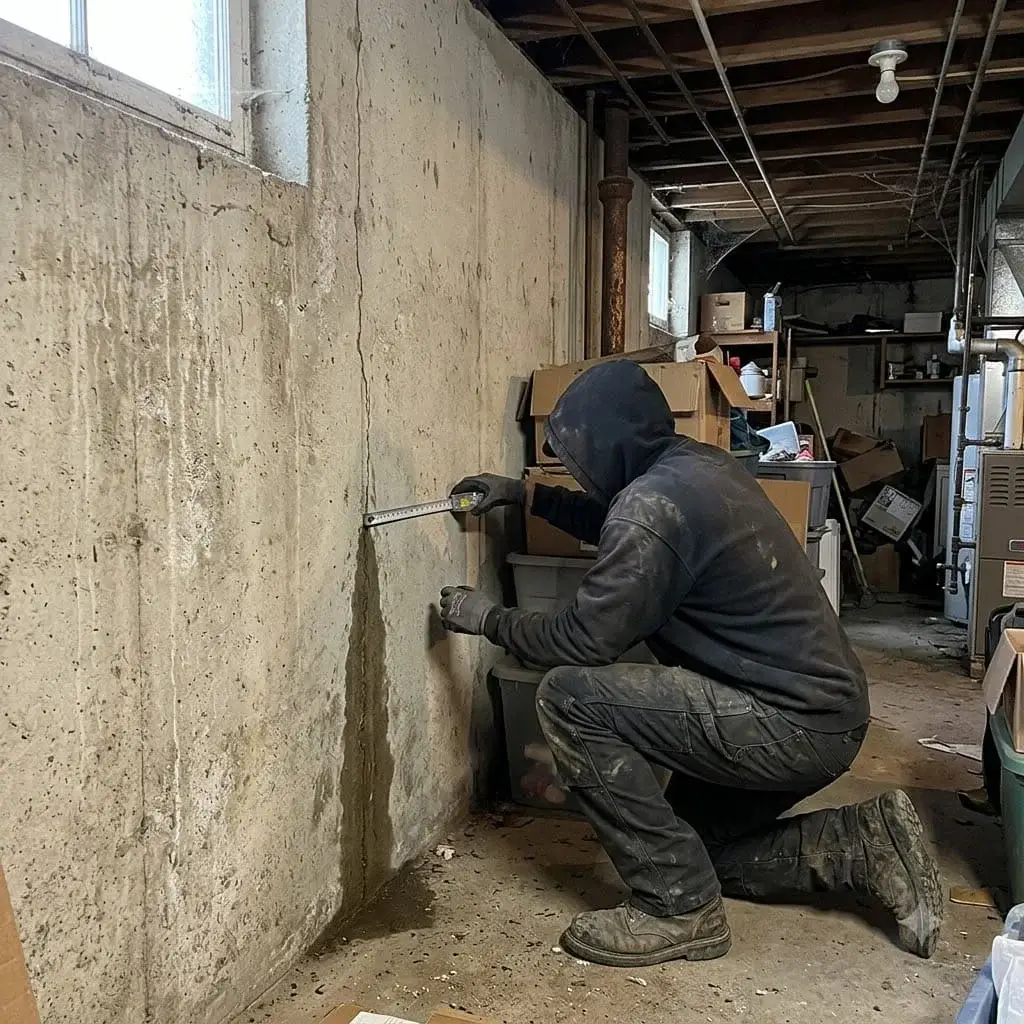
Types of Basement Wall Problems
Walls fail in a few recognizable patterns, and each one points to a different cause and a different repair.
Vertical and diagonal cracks often come from settling or shrinkage. They're usually less serious, but they let water in, so we seal them.
Horizontal cracks run along the wall, often near the middle, and they're a stronger warning. They usually mean soil pressure is pushing the wall inward, and the wall may be bowing.
Stair-step cracks follow the mortar joints in a block wall. They point to movement in the wall, from settling or from pressure on the outside.
Bowing or leaning walls have already moved inward. That is the most serious pattern, because the movement can continue.
How We Repair Cracks
Cracks that leak but aren't tied to wall movement can usually be sealed from the inside. We clean the crack and inject an epoxy or polyurethane material that fills it and bonds the two sides, stopping the water at the crack. Epoxy is rigid and restores strength. Polyurethane stays flexible and handles cracks that may shift a little. Crack sealing stops a leak, and it is not a repair for a wall that is still moving.
How We Stabilize Bowing Walls
A wall that has moved needs something to hold it. The right method depends on how far it has bowed and what it's made of.
Carbon fiber straps are bonded to the wall and anchored at the top and bottom. They resist further inward movement and work well on walls with mild bowing. They hold the wall where it is. They don't pull it back.
Wall anchors use plates on the inside of the wall connected by a rod to an anchor set in stable soil farther out. They can be tightened over time and suit walls with more movement.
Wall replacement or rebuilding is the last resort for walls that have moved too far to stabilize.
An inspection measures the wall and tells us which method fits. We don't recommend more than the wall needs.
Water Pressure Is Usually the Cause
Most wall problems start outside. Saturated clay-rich soil presses against the foundation, and that pressure builds in the months when the ground stays wet. In northeast Ohio, the USDA describes the Ellsworth series, a widespread glacial till soil, as having a subsoil that is 35 to 45 percent clay and a perched water table 11 to 24 inches below the surface from November to May in most years. Freeze-thaw adds to the load, since water in a crack freezes and widens it a little more each winter.
That's why a repair that only fixes the wall can fail if the pressure stays. Where it fits, we pair wall repair with interior drainage and a sump pump or exterior waterproofing so the wall isn't asked to carry the same load again.
Cracks and Ohio's Mine Subsidence Coverage
Ohio requires homeowners policies in Trumbull County to include mine subsidence coverage through the Ohio Mine Subsidence Insurance Underwriting Association. Subsidence is ground movement from collapsing abandoned mines, and it's a different cause from water pressure, though both can show up as cracks and shifting walls. If you can't tell which one you're seeing, call 123-456-7890 and we'll go through it with you before any work starts. That coverage doesn't deal with water in a basement.
What Wall Repair Costs in Warren
Wall repair prices depend on the problem. Published 2026 national cost guides put crack injection at roughly $250 to $1,500 per crack. Stabilizing a bowed wall with straps or anchors has no single typical figure, because the price follows how many walls moved, how far, and which method fits. Those are national figures, not Warren quotes.
The number and length of cracks, the amount of movement, and the wall material move the price. Only an on-site inspection can price a specific wall.
Why Warren Homeowners Choose Us
- Built around Warren homes. We know how soil, water, and older foundations work together to crack walls in Trumbull County.
- A free, no-obligation quote. We inspect the wall and give you a written price before any work begins.
- Appointments we keep. We come when we say we will.
- The right-sized repair. A sealed crack stays a sealed crack, and a moving wall gets stabilized. We don't sell one when you need the other.
Work is performed by independent professionals. Permit rules differ between the City of Warren and the surrounding townships, so we confirm what your local building department requires before work starts.
Frequently Asked Questions
Is a crack in my basement wall serious?
It depends on the type. Thin vertical cracks from shrinkage are usually minor, though they can leak. Horizontal cracks, stair-step cracks in block, and cracks that widen over time are more serious, since they point to the wall moving. A wall that is bowing inward needs attention soon. An inspection tells you which kind you have.
Can a bowed basement wall be pushed back straight?
Carbon fiber straps hold a wall where it is and stop further movement, but they don't straighten it. Wall anchors can be tightened gradually to pull a wall back toward straight, within limits. How far a wall can be corrected depends on how much it moved and what it's made of. We explain what to expect at the inspection.
How do you fix a leaking crack?
We clean the crack and inject epoxy or polyurethane to fill it and stop the water. Epoxy bonds the two sides rigidly, and polyurethane stays flexible for cracks that may shift. Injection stops the leak, but it doesn't stabilize a wall that is still moving, so we check for movement before we recommend it.
Will fixing the wall stop water from coming in?
Repairing the wall helps, but the water pressure outside is often the cause, and that pressure stays unless it's addressed. We often pair wall repair with interior drainage or exterior waterproofing so the repaired wall isn't asked to hold back the same load. The inspection shows which combination fits.
Is wall damage covered by homeowners insurance?
Standard homeowners policies generally exclude damage from soil pressure and groundwater. Ohio requires mine subsidence coverage in Trumbull County policies, which applies to ground movement from old mines, not water. Read your policy and ask your insurer about what's covered, because it differs from policy to policy.
How do I know if the cause is water or ground movement from mines?
Water pressure and mine subsidence can both crack walls, and they're hard to tell apart without an inspection. Water pressure usually shows up as leaks, damp walls, and cracks near the floor, while subsidence tends to move a whole structure. If you're not sure, call 123-456-7890 and we'll go through what you're seeing before any work starts.
Get a Free Estimate
For basement wall repair in Warren, call 123-456-7890 for a free estimate. Contact us or see the full service area.